A Recipe for Giving Back
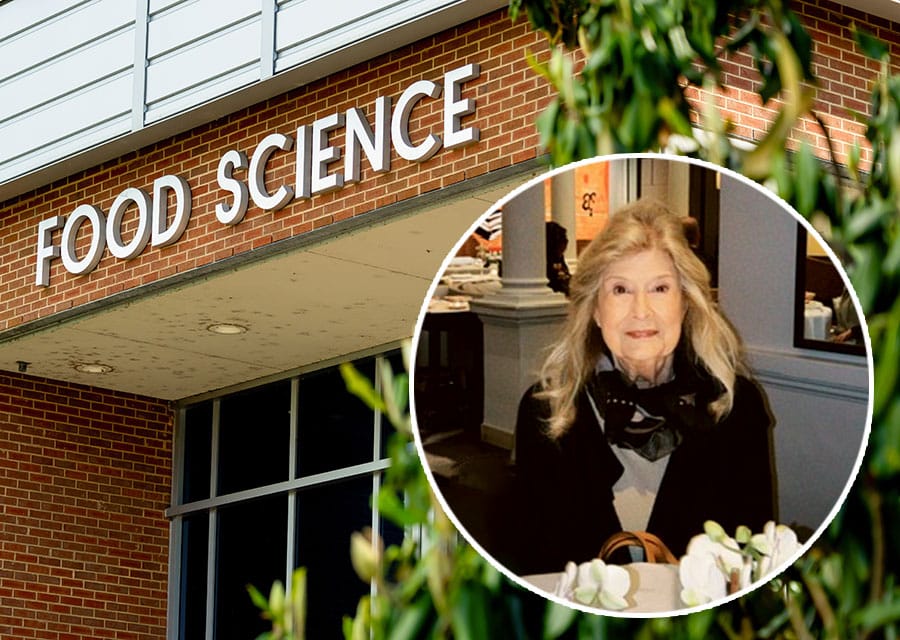
After making a mid-career shift from the private sector to teaching food science, Mary Lynn Crowley discovered a new appreciation for the education she’d received at UT and has now made a tax-saving planned gift in support of UT students.
Personal and Relational
“There are a lot of benefits that can come your way from giving — and not just in a personal sense. I mean the tax benefits. I’m surprised that really smart people don’t know that!”
Mary Lynn Crowley shares this insight with a friendly laugh. A 1967 graduate of the University of Tennessee, Knoxville, she has, in recent years, reconnected with the university that shaped her early career and has established a planned gift that will support its students in perpetuity. She’s struck by how few of her peers understand that generosity and good financial sense can go hand in hand. “Most people don’t understand the benefits of planned giving and how it affects your tax situation,” she says.
For Crowley, giving has always been deeply personal and relational. “You can have a relationship with the people you are donating to,” she says, a lesson she traces back to her late husband, an accountant who turned generosity into a yearly ritual. Each December he would ask her, “Where would you like to send some money?” She still marvels at the question. “How many people in your life say that to you?” Together they learned to value experiences and generosity over possessions.
A Career in Food Science
After earning her bachelor’s degree at UT, Mary Lynn built a career in the private sector, and then, in her mid-fifties, returned to school for a master’s in food science. She wasn’t sold on the idea at first. “I was 55 or so. And I said, why am I doing this?” she recalls. It was a lab assistant who cut through her hesitation with a throwaway observation: “You’re gonna be 55 anyway, so you might as well just do it.”
And she did. Recruited to teach at the University of Akron, near where she had settled, Crowley studied under a chemist who she recalls fondly as “a marvelous teacher.” The subject took hold of her. “I really fell in love with learning about the chemistry of food,” she says.
That late-career degree opened new opportunities to explore a field she insists is as much about people as it is about formulas. “It’s become about the psychology of food now,” she says, still fascinated by the distance between “what people want to eat, what they think they want to eat, and what they eat.” She is also, cheerfully, a defender of her industry against its critics. “I love defending the food industry. You know, they’re really not putting anything in there on purpose to harm you!” she laughs.
In the classroom she gravitated to the lab, where a failed recipe was a lesson rather than a loss. A botched batch on campus simply meant starting over, but the stakes, she reminded students, were different in the real world. “In a production situation in a food company, you just lost 100,000 dollars.”
When Mary Lynn returned to UT after years away, she was impressed by what she found. “I could see it happening all over again. I could see the enthusiasm of students,” she says. The visit convinced her. “I became adamant that this was a school I wanted to support,” she says, in large part because the experience was so relational and immediate. “I felt like I was really reaching the students at UT more than I was reaching them at other places.”
She is especially eager to encourage students to expand their skills and broaden their understanding of the world by taking risks. “I love thinking about supporting the study abroad program in foreign countries. That is so needed today,” she says, recalling her own relatively easy start with a touch of wonder: “I just waltzed into a good job.”
A New Family Tradition
Mary Lynn is now involving her daughter in the philanthropic decisions she once made with her husband, passing along the conviction that supporting others is, in the end, its own reward. “So it becomes more motivation toward not just support, but an experience for the student and an experience for the donor,” she says. Her advice to peers comes with a note of urgency: “Don’t put it off until you think [the economic landscape and tax code will] be better. It may not be. We don’t know.”
For those ready to take that step, the UTIA Office of Advancement can walk you through the options, including charitable remainder trusts and charitable gift annuities designed to provide income and meaningful tax advantages while supporting the next generation of students.
Questions about your legacy?
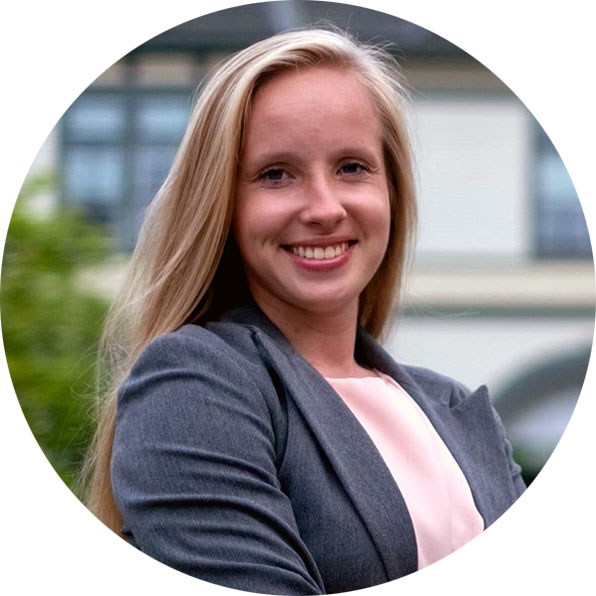
My name is Ashley. I am a UTIA alumna and a licensed attorney, specializing in estate planning. I am available to assist you in conversations regarding the options and benefits of making a planned gift to the University of Tennessee.
ASHLEY ESHLEMAN
UTIA Director of Development, Planned Giving
aeshleman@utfi.org
865-974-5720