
Lessons in Planning, Service, and “Paying Rent”
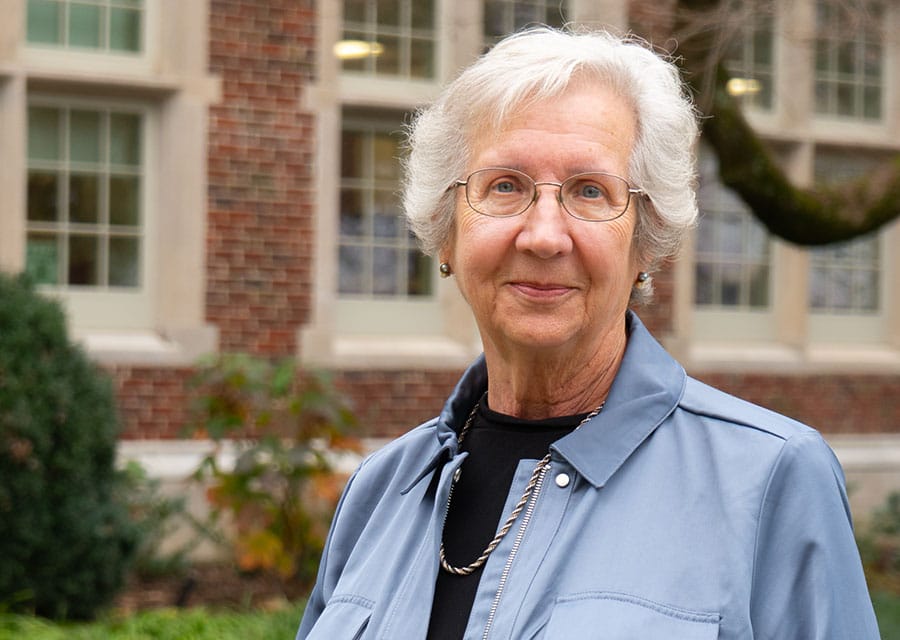
In 1982, Ruth Henderson McQueen, who was then working for UT Extension, stopped by the office of a colleague in Morgan Hall to ask for advice about her late grandfather’s will. What she had expected to be a quick conversation about some dusty paperwork turned into a lesson that would help to shape her life.
Simple Values
Ruth grew up in rural Tennessee without indoor plumbing, a telephone, or a television. “I was raised at least 50 years behind the time,” she says without apology. Her family didn’t have much, but they had land, understood the value of hard work, and were committed to the notion that you take care of what’s been entrusted to you.
“We didn’t have anything growing up, but we had a farm,” she recalls. “My grandfather purchased the farm in Philadelphia in 1910, and the deed read ‘To James Henderson and his heirs.’ He died of pneumonia after plowing corn in the spring of 1918. Luckily, my grandmother never remarried. He left her with three small children.”
Ruth says “luckily” her grandmother never remarried because decades after James purchased the farm, the original deed was the only documentation they had. “In 1982 nothing had been touched. It said the same thing it did in 1910 when they signed it. I took that on as one of my projects.”
Which is what brought Ruth to the office of Bob Pentecost, a leader at the UT Institute of Agriculture who had recently begun meeting with UT supporters to discuss planned giving opportunities.
“All three children were still alive. They ranged in age from 76 to 70. And if any one of them had died before we got this all straightened out—oh, what a mess! I went by Bob’s office and said, ‘This is our situation. What do I do?’ So he did some research because he needed to know the inheritance laws and the legal standing of land in 1918, when my grandfather died.”
Ruth respected Pentecost for both his professional knowledge and his practical wisdom. Their conversation made it clear to her that even well-meaning plans can have unintended consequences if they are not thought through carefully. Land, legacy, and family relationships were deeply intertwined, and planning mattered.
At the time, Ruth had no way of knowing how personally relevant that lesson would become. But it stayed with her, quietly informing the way she thought about responsibility, stewardship, and eventually, philanthropy.
Teaching Adults and Seeing the World
Ruth’s experience of the wider world began to expand in the fifth grade, when she joined 4-H. That single experience connected her to something far larger than her community. “Other than my parents and my church,” Ruth says, “basically everything good in my life has been tied to the land-grant university system.” It was through 4-H that she first encountered higher education, leadership, travel, and the possibility of living another kind of life. She followed that path all the way to the University of Tennessee.
A first-generation college student, Ruth earned two degrees from UT and soon found her calling in Extension. In 1975, she began her career as a home demonstration agent in Sequatchie County, working primarily with adults, with a focus on education and volunteer development. Two years later she joined the state-wide staff, where she trained Extension agents across Tennessee.
One of the most formative chapters of Ruth’s career began in the early 1980s, when she was asked to lead UT Extension’s international programming effort. They decided to focus on Japan, with youth exchange programs that paired Tennessee 4-H families with Japanese families. Language barriers quickly faded in the face of shared experiences. “It didn’t matter if we could speak the language much or not,” Ruth says. “They bonded.”
In 1985, she led the first group of Tennessee youth to Japan for a five-week exchange. The program emphasized full immersion—no phone calls home, only letters. “Phone calls caused more homesickness than they cured,” she says with a laugh. The experience, she believes, was transformational for all involved. “There’s nothing more educational than international travel,” she says. “It teaches you how to think—not what to think.”
Ruth returned to Japan again in 1996 as international committee chair, traveling extensively and speaking to host families and program supporters. Each trip reinforced her belief in education as a force for understanding and connection.
Paying Rent in This Life
In 2001, Ruth made the difficult decision to leave UT to become the primary caregiver for both of her parents, a role in which she served for the next eighteen years. During that time, she confronted the realities of land ownership, family responsibility, and long-term planning in very personal ways.
Those experiences echoed the lesson she had learned years earlier in Bob Pentecost’s office. Planning matters. Clear intentions matter. And without them, families and their land can suffer.
Ruth has been a donor to UT since 1975, but her philanthropy deepened over time as her understanding of legacy sharpened. In 2014, she established a planned gift supporting Lone Oaks Farm and 4-H Open Road. She also became a strong advocate for estate planning education, particularly for landowners who want their property to continue serving a purpose beyond their lifetime.
“The more planning you put in,” she says, “the more likely you are to be successful.” For Ruth, success isn’t measured in acreage or assets. It’s measured in impact—on young people, on education, and on the future of the land-grant mission.
Her motivation is rooted in faith as much as experience. “The good Lord has put me in a position where I have some opportunities,” she says. “And I think He expects me to. We’re supposed to pay some rent in this life.”
Ruth recently updated her estate plan and is happy to know that conversations like the one she had in 1982 still happen every day at UTIA. “Folks need to know about Ashley. They need to know that help is here and that they can trust unbiased, professional information. There is a role for estate planning in everybody’s life.”
Questions about your legacy?
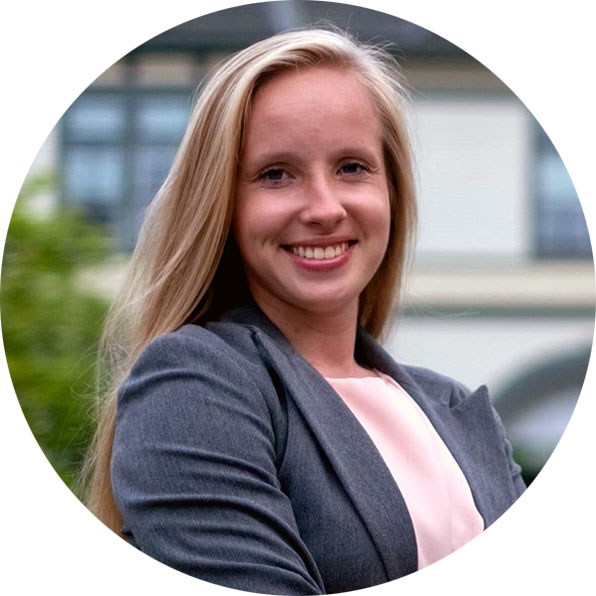
My name is Ashley. I am a UTIA alumna and a licensed attorney, specializing in estate planning. I am available to assist you in conversations regarding the options and benefits of making a planned gift to the University of Tennessee.
ASHLEY ESHLEMAN
UTIA Director of Development, Planned Giving
aeshleman@utfi.org
865-974-5720